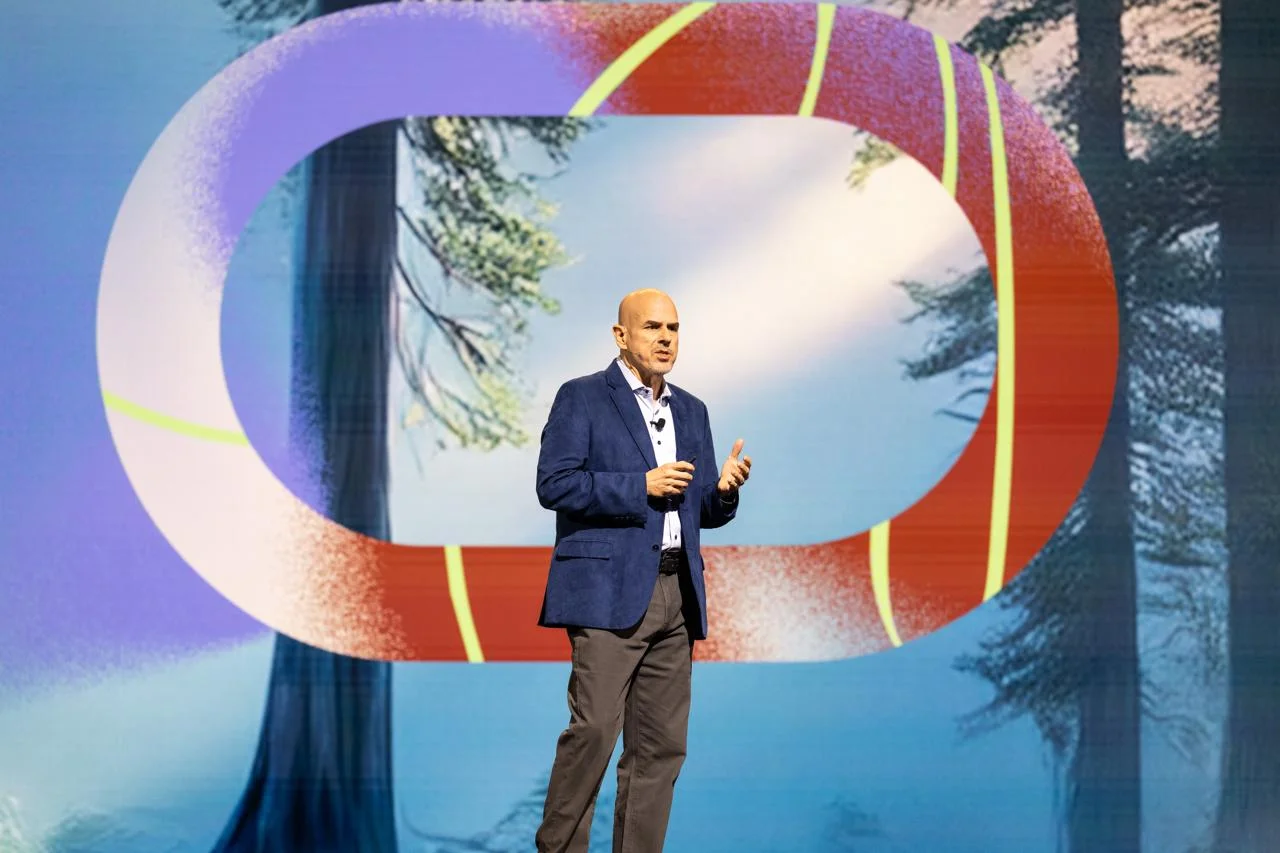
Mike Sicilia, Oracle CEO - photo: Oracle
Oracle used Oracle AI World and SuiteWorld 2026, held in Las Vegas, to outline how artificial intelligence is reshaping enterprise applications and the role of ERP systems. Across the announcements, a common direction emerged: AI is moving beyond answering questions and assisting users to taking part in business processes, from identifying issues and recommending actions to executing tasks under defined permissions and human oversight.
The presentations by Oracle CEO Mike Sicilia and NetSuite founder and Executive Vice President Evan Goldberg covered different parts of this strategy. Oracle introduced new AI capabilities for Fusion Cloud Applications, while NetSuite announced industry-focused agents and tools designed to bring business knowledge into ERP workflows.
The developments also raised a broader question for enterprise technology: as AI takes on more operational work, how will employees, business processes and traditional software capabilities evolve?
Oracle expands agentic AI across Fusion Cloud
During his keynote, Mike Sicilia presented new AI capabilities for Oracle Fusion Cloud Applications, including Fusion Claw and Fusion Agentic Applications. The announcements reflect the company's effort to embed AI more deeply into business applications and support the execution of complex workflows.
The new capabilities are designed to help users delegate tasks to AI agents while retaining visibility and control over their execution. The portfolio also includes Fusion Companion, an AI assistant intended to help users interact with enterprise applications, and Fusion Agentic Home, which brings together agent-related activities and workflows.
Oracle also introduced tools such as Fusion Setup and Configuration Registry to support the configuration and management of AI capabilities. The emphasis on permissions, approvals and governance reflects the need to define how agents can operate within business environments.
The company's approach places AI within existing enterprise processes, including activities across human resources, finance and other business functions. Rather than limiting AI to isolated prompts or individual tasks, Oracle is positioning agents as participants in broader workflows.
NetSuite moves toward an autonomous ERP model
At SuiteWorld, Evan Goldberg outlined NetSuite's direction toward what the company describes as an autonomous ERP model. In this vision, the system can identify business issues, recommend actions and execute tasks, while people remain accountable for decisions and outcomes.
The announcements included SuiteAgents, a group of AI agents designed for specific industry needs. The initial applications address software, products, services, healthcare, construction and nonprofit organizations.
The agents use NetSuite business data and industry context to support activities such as monitoring customer retention and revenue performance, identifying inventory and supply-chain risks, reviewing project staffing and financial health, and supporting construction project budgets and payment applications.
NetSuite also introduced SuiteSkills, a collection of more than 45 business skills that can be used through Ask Oracle and external AI tools, including ChatGPT and Claude. The capabilities are intended to bring NetSuite business context into AI-assisted activities such as prioritizing collections, identifying project risks and determining which accounts should be reconciled first.
Another announcement, SuiteExpress, uses AI to support ERP implementation and evolution. The tool assists with activities such as requirements gathering, configuration, data migration and testing. During the keynote, Goldberg cited Worksmith as an example of a company that began operating on NetSuite in 60 days, compared with an initial expectation of six months.
The company also presented developments to NetSuite Next and Ask Oracle. The natural-language experience allows users to query business information, create records, analyze data and generate forecasts. NetSuite Next was made available to customers in the United States and Canada, while customers in the United Kingdom and Australia were among the first to access a preview.
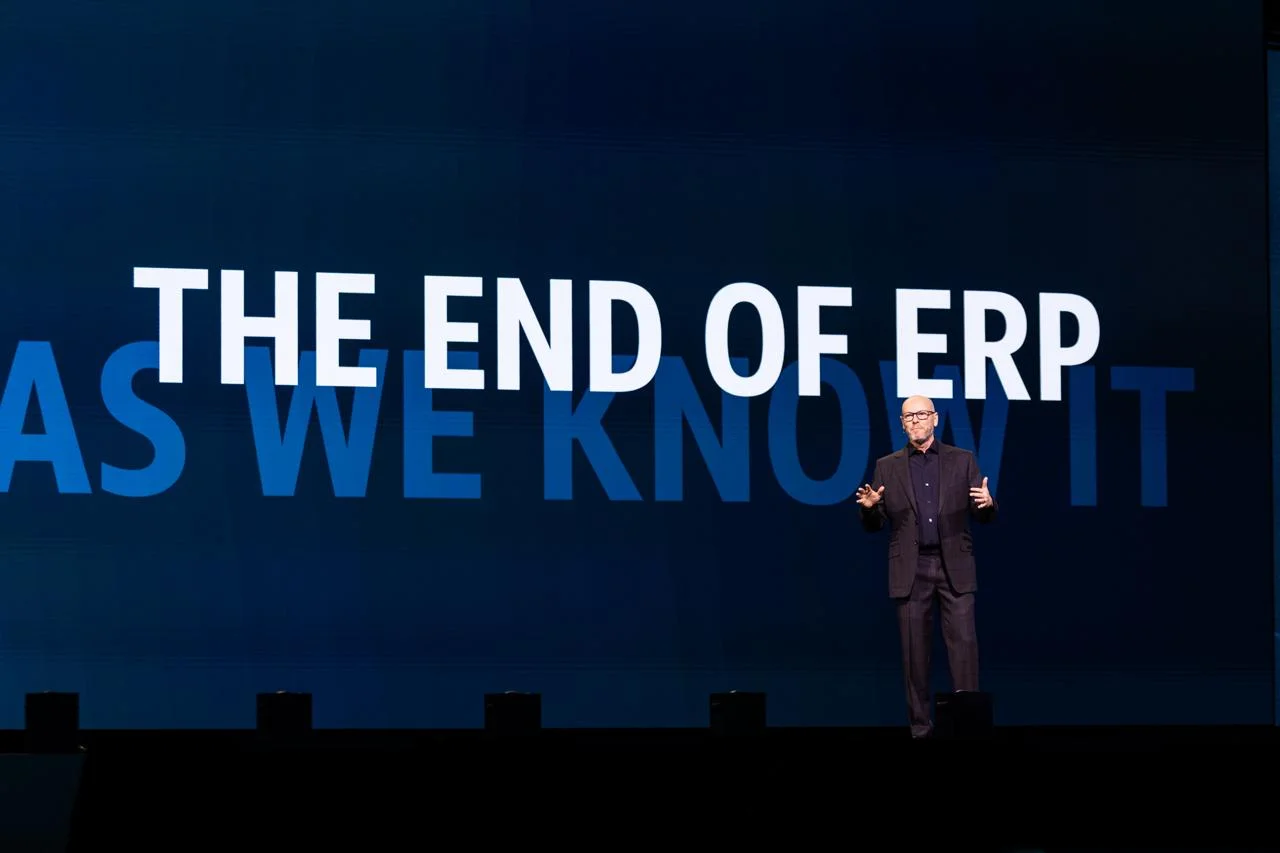 Evan Goldberg, NetSuite founder and Executive Vice President - photo: Oracle
From recording transactions to executing business workflows
The shift described by Oracle and NetSuite goes beyond adding conversational interfaces to existing software. It changes how users interact with enterprise systems and how work is distributed between people and technology.
In an interview with Portal ERP, Kaushal Kurapati, Oracle's GVP of Products for the AI Agent Platform, said the evolution of ERP is connected to advances in large language models and their ability to reason and work across longer-running processes.
“Agents are a means to an end,” Kurapati said. He explained that people will continue to define business objectives, establish boundaries and remain accountable for outcomes, while agents can research options, develop recommendations and execute work when authorized.
For companies, this transition requires more than introducing AI tools into existing routines. Kurapati emphasized the importance of reconsidering how workflows are designed and identifying which activities can be handled by systems and where human review or approval remains necessary.
“I would suggest that don't just bolt on an AI to an existing workflow,” he said. “You should really rethink” the desired business outcome and how agents can help achieve it.
Measuring the business impact of AI
Kurapati also highlighted the importance of defining success metrics before implementing agentic applications. Depending on the process, companies may seek to reduce execution time, lower costs, prevent errors or free employees from repetitive work so they can focus on other responsibilities.
Oracle has incorporated an ROI dashboard into its Agent Studio product. According to Kurapati, users can estimate the time an agent is expected to save compared with a person performing the same task. Once the agent executes the work, the dashboard can provide information on time savings and other measures of its activity. Customers can also adjust estimates as they gain experience with the system.
The executive said that the impact of AI will extend across business functions, particularly where processes still involve substantial manual work. Examples include invoice processing, sales preparation, inventory management, supply chain planning, customer service and human resources.
He also pointed to opportunities to make new types of software capabilities accessible to companies that previously handled certain activities manually because dedicated solutions were unavailable or difficult to implement.
A changing role for enterprise applications
The announcements at Oracle AI World and SuiteWorld point to a broader evolution in enterprise software. ERP systems are being positioned not only as repositories of business information, but also as platforms that can interpret data, coordinate workflows and support execution through AI agents.
However, the transition does not eliminate the need for business expertise or human accountability. The new operating model depends on reliable data, clearly defined processes, permissions and appropriate levels of supervision.
As Kurapati noted, people will continue to set direction and take responsibility for results, even as agents assume a larger share of operational work. The challenge for companies will be to determine where AI can contribute, how to redesign processes around these capabilities and how to measure the results.