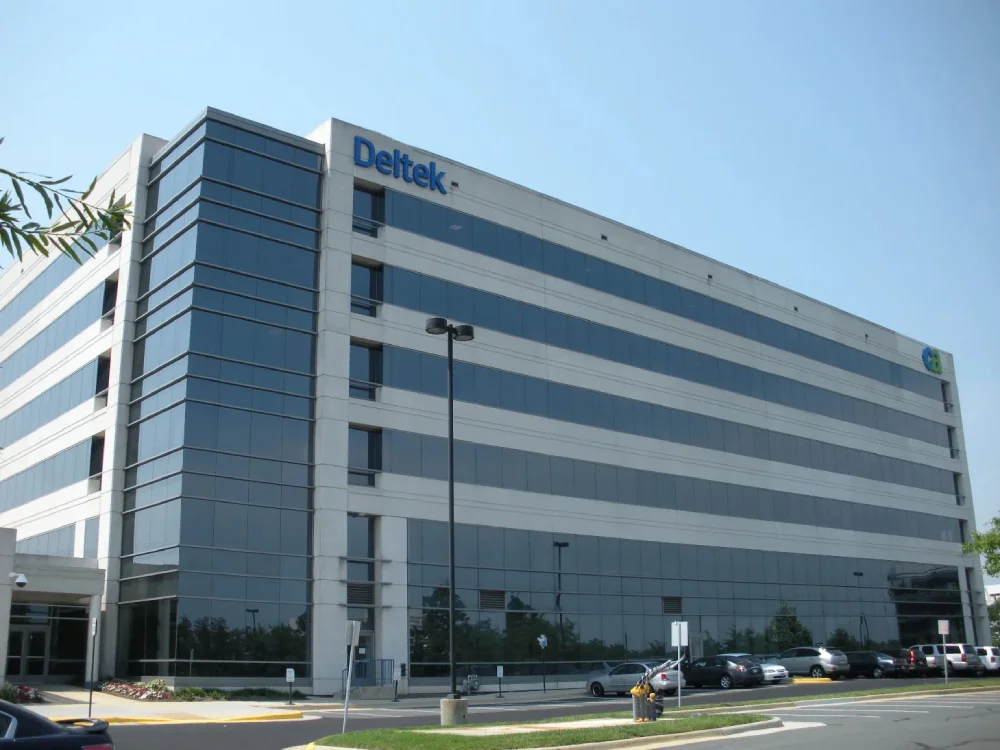
Deltek, a company that makes project management and ERP software for project-based businesses, has published its two annual Clarity industry studies, one covering government contracting and the other architecture and engineering (A&E).
The reports draw on survey responses from 917 government contractors and 896 A&E firms across the United States and Canada, and document a common pattern across both sectors: firms are growing revenue while facing strain on margins, talent and the ability to turn AI adoption into measurable results.
In government contracting, revenue growth is holding but financial pressure is rising. The study found firms reported 15% average revenue growth in 2025 with 16% projected for 2026, yet nearly 90% of respondents reported at least one declining financial metric. The main drivers of that decline were:
Rising labor costs, cited by 31% of respondents
Higher overhead expenses, cited by 28%
Increased subcontractor and vendor costs, cited by 24%
On AI, adoption in the government contracting sector is approaching saturation while measurable returns lag. The study reported that 90% of respondents are using or planning to use AI in at least one business function in 2026, with generative AI adoption exceeding 90%. Despite that, 45% said they are unclear on the return on investment, and only 5% of IT and security teams described their organisation as "fully developed" in AI maturity, with most still piloting (37%) or scaling (38%). The top concerns about AI were:
Data privacy and security, cited by 37%
The potential for inaccurate forecasts, cited by 29%
Difficulty validating AI-provided insights, cited by 26%
Compliance is also becoming a condition of eligibility rather than a back-office function. The study found 96% of respondents expect compliance costs to stay elevated or increase, and 59% anticipate that the Cybersecurity Maturity Model Certification (CMMC), a US Department of Defense requirement, will apply to them, with 58% of those expecting to need Level 2 certification.
"Government contractors are entering a new era where speed, compliance, and cost control must align. Our findings show that while firms are rapidly adopting AI and automation, many are still working to translate that investment into measurable outcomes while maintaining control," said Kevin Plexico, SVP of Information Solutions at Deltek. "The defining challenge contractors are facing is closing the gap between adoption and execution. Organizations that can better integrate their systems, strengthen data visibility, and embed governance across the project lifecycle will be able to stay competitive in an increasingly complex and regulated environment."
The architecture and engineering study showed a similar tension between demand and capacity. Firms are forecasting 9.5% net revenue growth in 2026, but staff grew only 1.2% while turnover remained above 13%. Utilisation declined to just under 60% and operating profit fell to 16.7%. AI adoption in the sector rose from 53% to 70% year over year, and generative AI use rose from 64% to 78%, but only 38% reported measurable positive business impact tied to AI, and 39% said it was too early to see benefits or that they were still piloting.
Cybersecurity emerged as a concern in the A&E sector alongside digital transformation pressure. The study found that 93% of firms experienced a cyberattack attempt in the past three years, with one in five reporting a successful attack that caused financial or reputational damage. Meanwhile, 42% believe they could lose market share within two years without significant digital transformation, up from 33% in 2025. The top AI challenges firms reported were:
Identifying where and how to apply the technology, cited by 62%
Integrating AI systems, cited by 56%
Data and cybersecurity, cited by 52%
"In the A&E industry, firms are still optimistic, but the focus has shifted from growth to cost control and improving margins. Firms are facing increased constraints around talent, capacity, and profitability," said Megan Miller, Senior Director, A&E Industry Insights Lead at Deltek. "What we're seeing is a shift from growth at all costs to more disciplined, performance-driven operations. Leading firms will need to focus on surfacing better data, embedding AI directly into delivery workflows, and bringing discipline to how they manage and measure project performance."