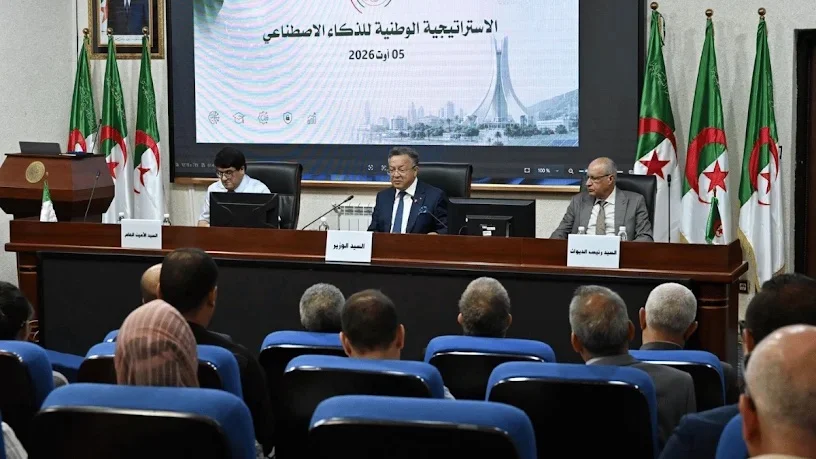
Algeria has agreed a joint inter-ministerial roadmap to put artificial intelligence into its public services while reducing the country's dependence on foreign technology suppliers, according to Kamel Baddari, minister of higher education and scientific research.
Four elements sit at the centre of the deployment plan. The government intends to rely on sovereign open-source AI models, to build high-performance computing centres, to hold national data in domestic storage, and to apply stronger safeguards to public-sector applications.
The approach mirrors a wider pattern across North Africa. Governments in the region have been building localised cloud infrastructure and sovereign compute nodes, according to ITWeb Africa, with the twin aims of loosening their ties to foreign platforms and holding public sector data inside national borders.
Skills development runs alongside the infrastructure work. The government is pairing training programmes with universities and setting up a dedicated scientific research centre and specialised research units whose remit is to move research output into industrial use, Baddari said.
The gap between current output and the national target is wide. In June, Baddari presided over the graduation of the first cohort from the National Higher School of Artificial Intelligence, a group of 105 students. The government is working toward 30,000 AI engineers by 2030.
Institutional groundwork has been laid elsewhere. In April, Algeria opened its first AI and cybersecurity startup cluster at Sidi Abdellah, set up by the ministries of higher education, economy and telecommunications to link research institutions with emerging technology businesses.
A joint monitoring committee will oversee implementation against a set timeline. Baddari framed the roadmap as the point at which Algeria's AI strategy moves from policy formulation to execution.