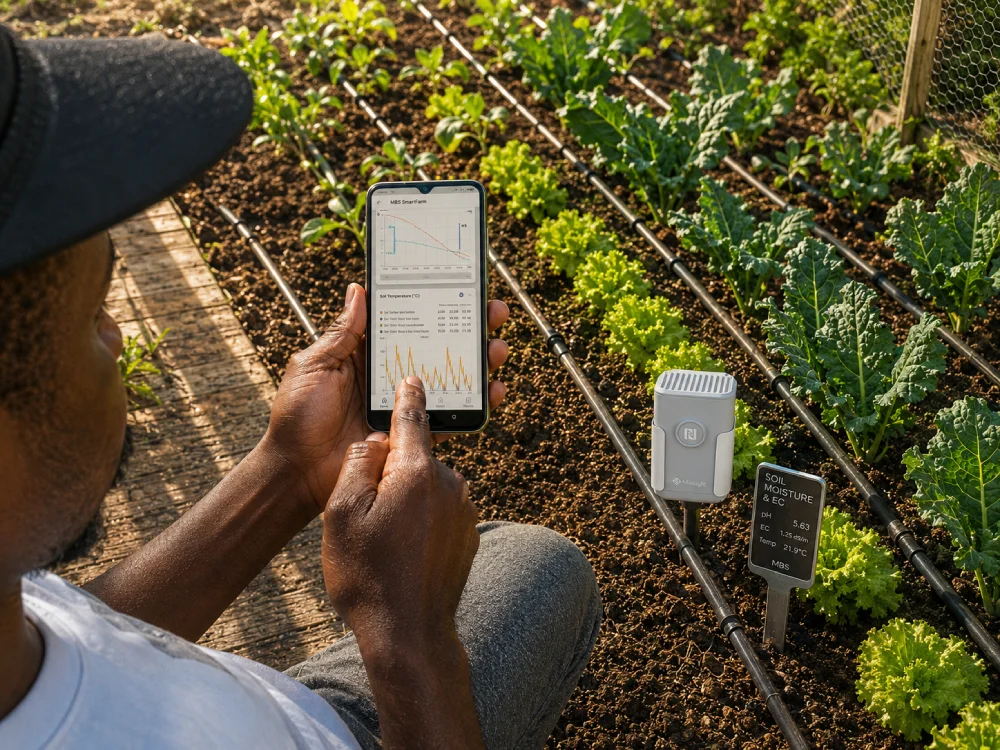
South African startup MyBitSecure has moved its SmartFarm platform into full deployment following the completion of a three month pilot programme designed to test connected agriculture technologies in a working farming environment.
The company says the rollout will focus on emerging farmers, agricultural cooperatives and smart farming programmes across Sub Saharan Africa as growers face increasing pressure to manage water usage, soil conditions and operational efficiency with limited resources.
MyBitSecure developed the MBS SmartFarm Platform as an integrated agriculture technology stack combining IoT enabled irrigation systems, soil monitoring tools and cybersecurity protections designed to secure farm generated data. The company previously said the system was built to work alongside existing agricultural infrastructure through retrofittable sensors, flow meters and monitoring dashboards rather than requiring complete replacement of existing equipment.
Testing took place through an applied research pilot at the Sustainability Institute in Lynedoch, Stellenbosch, where the company says the project produced independently observable improvements in soil health and water management over a three month period.
The conclusion of the pilot marks a shift from research validation toward commercial deployment, positioning the platform as an operational technology offering rather than a standalone monitoring tool.
“Soil health is the foundation of food security and for too long, the intelligence needed to protect it has remained out of reach for the farms and communities that need it most. The MBS SmartFarm Platform changes that. What we are bringing is a contribution to the long-term resilience of food systems across this continent, backed by evidence, built for African conditions, and designed to serve the people who feed us,” said Tandi Rouse, co-founder and director of MyBitSecure.
The deployment highlights growing interest in agriculture technologies that combine connected infrastructure with operational analytics while allowing farmers to digitize existing environments rather than replacing them outright. For smaller agricultural operations, retrofittable systems may also reduce the barriers associated with adopting connected farming technologies at scale.