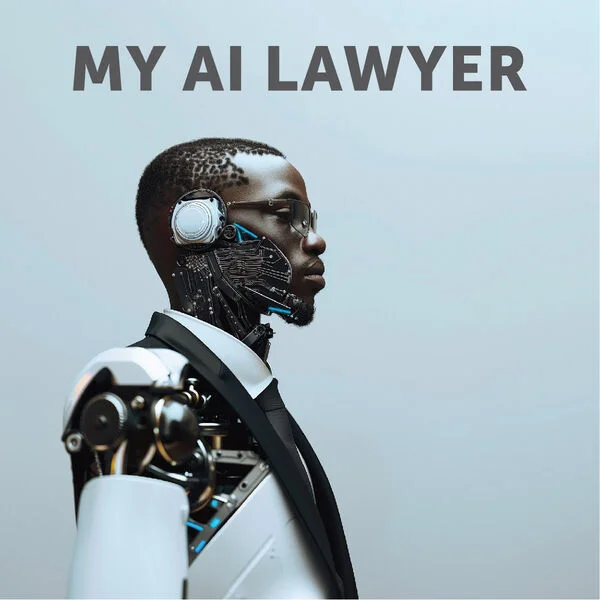
My AI Lawyer, an AI legal chatbot developed by Legal Interact and Legal&Tax and available through the web and WhatsApp, recorded workplace-related questions far more often than any other legal category during the period. Criminal law represented 15% of queries, followed by financial and debt matters at 12%, while family law and property and rental disputes each accounted for roughly 10%.
Questions within the workplace category focused on salaries and wages, employment contracts, unfair dismissals and procedures involving the Commission for Conciliation, Mediation and Arbitration. The figures provide a view into the types of legal issues users are turning to an automated service to understand before pursuing formal legal assistance.
“The sharp growth in the queries we process on our platform reflects a growing need in the South African market for solutions that make legal advice accessible to people who can’t afford a lawyer yet don’t qualify for legal aid,” said Michael Visser, head of services at My AI Lawyer.
Visser said the workplace results also reflect an information gap between employers and employees.
“The questions we see show that employers hold a lot of the power in the relationship with their employees, often because they have access to legal resources,” he said. “Even when the law is on the employee’s side, many people do not fully understand their rights in terms of job security, leave or disciplinary processes.”
The platform's role, according to Visser, can extend beyond a single legal issue. He cited a recently retrenched worker who used the service to ask about rental negotiations and debt counselling, illustrating how one financial event can lead to questions across different areas of law.
The service also operates within a broader discussion about the use of AI in access to justice. At the University of Johannesburg’s AI and the Law conference in July, Justice Minister Mmamoloko Kubayi questioned whether wider use of AI could introduce new risks while attempting to expand access to legal support.
“Are we not, in our quest to increase access to justice through AI, at the risk of increasing access to injustice?” she asked.
Professor Tshilidzi Marwala, UN Under-Secretary-General, raised a related concern about governance at the same conference. “If we let the companies write the rules for the very tools meant to close the justice gaps, we risk the same digital divide simply reappearing inside the solution.”
My AI Lawyer states that it is trained on South African law by South African lawyers and operates as a closed system, meaning user questions are not used to train external models. Its materials also state that data is processed within Azure under POPIA and that complex matters can be escalated to qualified human advisors. The project was awarded Microsoft’s Global Inclusion Changemaker award.
Language remains another issue raised around AI-based legal assistance. Professor Letlhokwa Mpedi, vice-chancellor of the University of Johannesburg, said at the conference: “An AI-driven legal aid tool is not neutral if it cannot reason competently in isiZulu or Sesotho.”
Research from UCT cited in the discussion classifies nine of South Africa’s 11 official languages as low-resource languages for language modelling. The available platform data does not indicate which languages users employ when submitting questions or how performance differs across them.
Accuracy is another area under scrutiny. South African courts have already encountered cases involving fabricated legal references generated by AI, including a 2025 matter in which an advocate was referred to the Legal Practice Council after an AI tool cited non-existent case law. Santam, an insurer, has also argued that AI hallucination should be treated as a foreseeable engineering risk rather than an unforeseeable failure, with implications for professional liability.
Visser said My AI Lawyer is intended to complement rather than replace qualified legal representation. “Most legal questions on our platform never become formal legal cases, but a conversation about what the law says and what the options are can make all the difference,” he said. “The right advice helps people act earlier, make better decisions and approach difficult situations with greater certainty.”
I kept the available facts tightly tied to the source and removed references whose company or organizational context was not provided in the material.