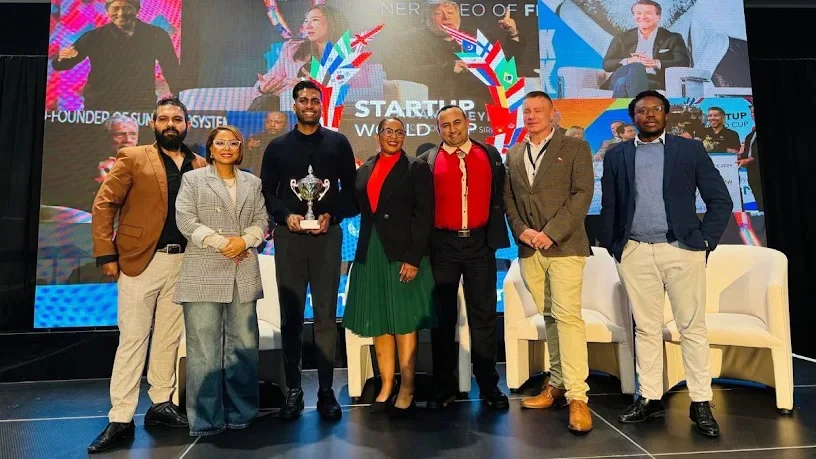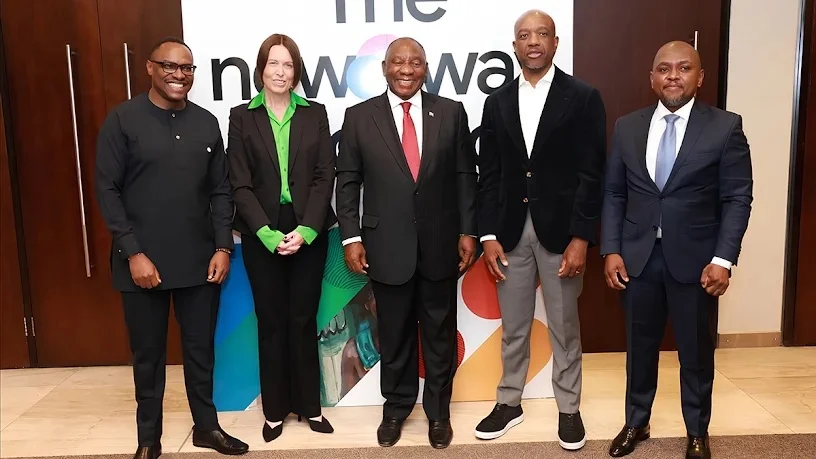
Google, the US-based technology company owned by Alphabet, announced plans to build its first Digital Exchange Port on the African continent, to be located in South Africa's Eastern Cape province. The announcement came at the inaugural Google Cloud Summit Africa, held in Johannesburg on July 1, 2026, where more than 3,000 business leaders, developers, public sector officials and partners gathered. The Eastern Cape hub is one of four such ports Google has committed to building across Africa.
A Digital Exchange Port functions as a major internet connectivity hub where international subsea cables, cloud infrastructure and communication networks meet to exchange data. The facility allows internet service providers, cloud platforms and enterprise networks to interconnect and route traffic without sending data through multiple overseas networks first.
James Manyika, Google's senior vice president for research, labs, technology and society, described how the Eastern Cape location fits into the company's existing subsea infrastructure: "The South Africa digital exchange port is a way to take advantage of the larger cable that we've got that runs to Central Africa through South Africa to Australia. That's an investment we're making to improve the connectivity for businesses, while supporting Google's cloud platform. At the same time, it builds on our cloud infrastructure, meaning it's going to give South African innovators and businesses the connectivity solutions and compute power they need."
The port will connect South Africa to Australia through the Umoja subsea cable and support a new subsea route to India, adding to Google's existing investments in the Equiano, Umoja and India-Africa cables. Manyika did not disclose the value of the Eastern Cape investment but said the project forms part of Google's broader Africa infrastructure commitments, which have already exceeded its $1 billion investment pledge to the continent.
Maureen Costello, vice president for UK, Ireland and Sub-Saharan Africa at Google Cloud, said the facility will combine high-speed connectivity with access to AI infrastructure, including the company's Gemini Enterprise platform and agentic AI capabilities: "You will have heard us talk about Gemini Enterprise, our agentic platform that allows developers to work with our models to build on top of that and to innovate."
Manyika said the Eastern Cape was selected to distribute digital infrastructure investment beyond South Africa's major economic centers and to contribute to local economic development alongside its technical purpose: "Making these investments in ways that both stimulate and benefit the economy around these places is quite important. The four planned Digital Exchange Ports will help create a more resilient African internet ecosystem by improving regional and international connectivity, while supporting the continent's accelerating adoption of cloud computing and artificial intelligence."
Alongside the Digital Exchange Port, Google announced several additional Africa-focused initiatives at the summit. In collaboration with WeThinkCode, a coding education organization, Google's Economic and Community Development programme will invest R3 million to establish a digital innovation center at the George Tabor Campus of South West Gauteng TVET College in Soweto, aimed at digital skills development. Applications for the 2026 South African cohort of the Google for Start-ups Accelerator will open on July 21, with 15 local startups to be selected for an AI-focused program offering mentorship, technical support and non-dilutive equity-free funding, contributing to Google's goal of supporting 50 African startups between 2024 and 2028.
Google has also partnered with The Akuna Group, a media company owned by actor Idris Elba, backed by more than $1 million in Google.org funding, to provide AI-focused creative education and digital tools for underrepresented African creators. Africa's first Applied AI Lab, launched in Ghana and developed through the Google AI Futures Fund, Google Research and venture capital partners, will pair African founders with Google researchers and give them early access to the company's AI models.
South African President Cyril Ramaphosa delivered a keynote at the summit: "Today's Google Cloud Summit affirms Africa's position as a core growth region for the global cloud ecosystem. As we step boldly into the age of artificial intelligence, our aspiration is to anchor South Africa as a catalyst for the continent's digital ascendancy. By building robust infrastructure to harness this technology, we are doing more than modernising our economy, we are taking a quantum leap into the future."
Manyika closed with a comment on the scope of Google's commitment: "The AI opportunity for Africa is significant, and Google is committed to doing our part in working with Africans to help Africa realise it. Building on our past commitments, we're making new investments in critical areas: infrastructure, African-led innovation, and education and skill building. From a new Digital Exchange Port in the Eastern Cape, to Africa's first Applied AI Lab, we're harnessing technical progress and building partnerships to amplify and scale Africa's incredible vibrancy, hustle and innovation for the world."