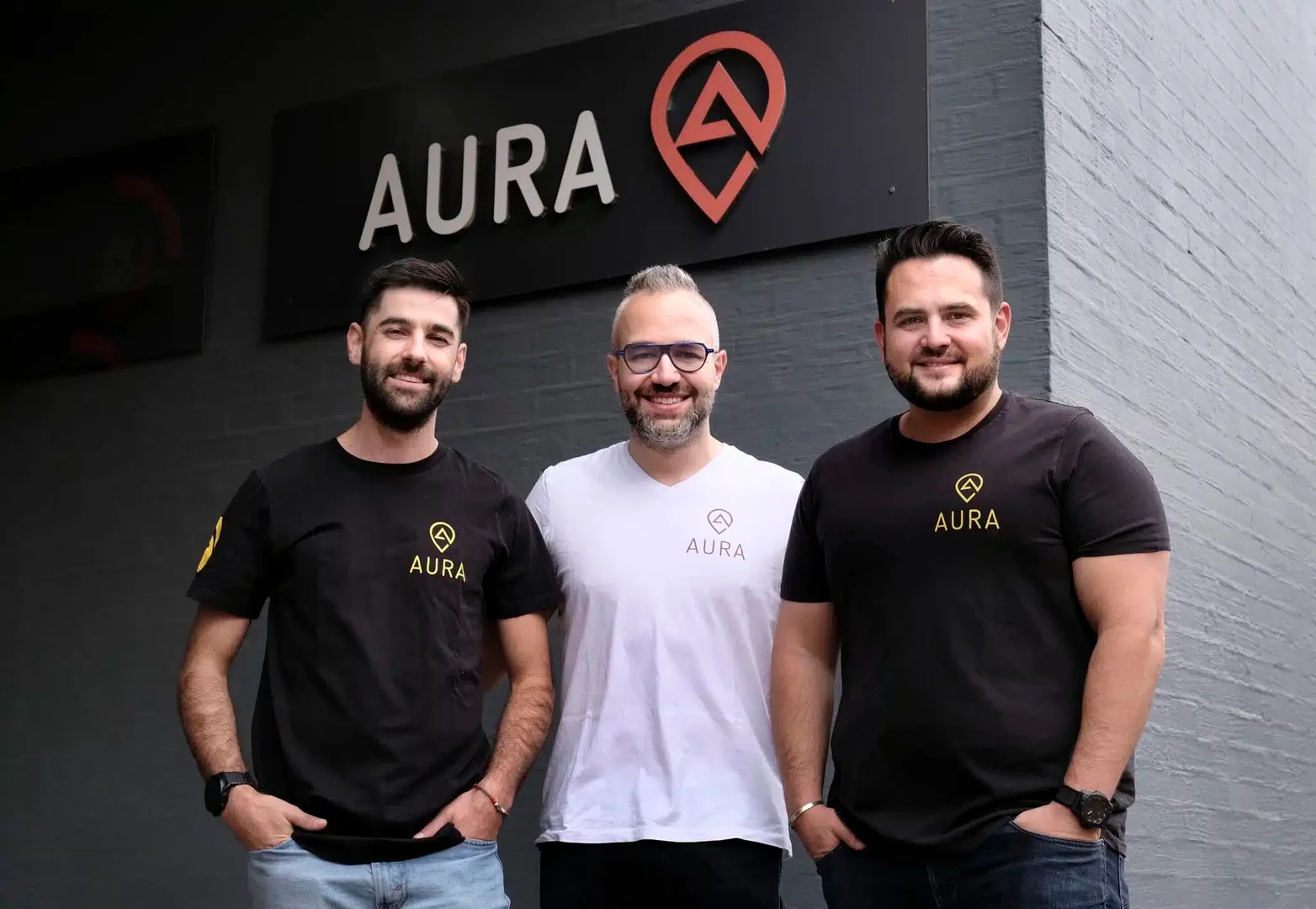
Between 94 and 99 percent of alarm activations that Fort Worth police officers respond to are false. Seattle stopped dispatching officers to most unverified burglar alarms in October 2024, joining cities including Houston and Phoenix that now require audio or video confirmation before sending a patrol car. AURA, a Johannesburg startup that has spent eight years building private emergency response infrastructure in South Africa, is launching in Dallas-Fort Worth to fill what it describes as the resulting gap.
Founded in 2017, AURA routes emergency alerts to vetted private security and medical responders through an auto-dispatch platform that identifies the nearest available provider by GPS. The company does not operate under its own consumer brand. Instead it embeds its APIs into third-party platforms: current partners include Uber, Samsung, Discovery and FNB, one of South Africa's largest banks. When a user triggers an alert through any of those platforms, the request moves through AURA's system to the closest verified responder.
The founding logic came from a specific observation. "In an emergency, accessing help was often far more difficult than it should be," said Justin Suttner, AURA's Head of Sub-Saharan Africa. "Gaps in public infrastructure meant it was easier and quicker to order a pizza in South Africa than to get emergency assistance when someone's life was at risk."
The platform now covers all nine South African provinces, including smaller towns and semi-rural areas. More than 11,000 vetted medical and security providers are on the network, and the company reports average response times under 10 minutes.
Responders must clear an assessment covering capability, experience, legal compliance and operational readiness before joining. "AURA is not simply aggregating a large number of responders but building a trusted network where users know that the person arriving has been properly verified," Suttner noted.
The American market differs structurally from South Africa, where roughly 84 percent of the population relies on public healthcare and resource gaps across provinces have limited emergency access. In the United States, the pressure point is fiscal and operational: police departments in large urban centers have pulled back from low-probability incidents as demand on public safety resources has grown. The outcome in both cases is the same, an alarm goes off and no public-sector responder arrives.
AURA positions its US service as a complement to law enforcement rather than an alternative, routing unverified incidents to private responders so that officers can stay focused on confirmed emergencies. For American deployments, the company is targeting response times under 30 minutes, compared with the sub-10-minute benchmark it maintains in South Africa.
Dallas-Fort Worth is the first active US market. Houston, Los Angeles, Seattle and Atlanta are named as next targets, along with additional cities across Texas, Florida and Arizona. The €13.5 million Series B that funds the expansion was co-led by Partech and the Cathay AfricInvest Innovation Fund, bringing total funding to €21 million.
Since 2017, the company claims to have saved close to 9,000 lives, defining a saved life as an incident where a responder's intervention played a critical role in preventing a fatal outcome. Documented cases include interventions involving gender-based violence, near-drownings and premature childbirths, and the company estimates it saves five lives per day in South Africa alone.
In South Africa, users who access AURA through banking apps and ride-sharing platforms pay well below $2 per month on average. Pricing for US deployments has not been disclosed.